

Simultaneous Invention
On Ideas Whose Time Has Come, Getting There First & Chemical Reactions

I was talking to a friend about an idea I’m working up (obsessing over) and she asked me, what happens if someone else does it first?
I guess the answer to that is may the best man win. Or something like that.
Does anybody else remember reading Cleo and Cosmpolitan magazines in the 1980s - especially the ones from the previous decade that were always in doctor’s waiting rooms? Absorbing the wisdom of these pages was my equivalent of sport, as in, flicking through these pages was what I would opt to do at school while other people jumped around sweatily. Ew David. And I really did learn so much about how to be a modern woman in the world, like How To Be A Sexy Housekeeper (a headline I’m thinking of borrowing for an album title), Seduction By The Stars and How To Dump A Man With Finesse. Not to mention those eye opening sealed sections!


Anyway, my point is, regular readers of these racy tomes would recall that Cleo and Cosmo regularly hit the shelves simultaneously blaring almost matching headlines. Getting there first was an ongoing war that was never won. Were there spies in the offices or were these ideas just floating around in the zeitgeist?
We know that the concept of photography emerged simultaneously from France and England in the late 1830s.
Louis Daguerre, a visual artist who worked for the Paris Opera and had already co-created the Diorama in 1822, kept tinkering away at the idea of playing with light and image and eventually came up with the daguerréotype, the first photographic process described at the time as ‘the mirrors with a memory’ that could make ‘a truthful likeness’ - a positive image captured on an iodine-sensitised silver-covered copper plate, developed with heated mercury vapour. Daguerre was granted a lifetime pension by the French Government in return for gifting the daguerréotype process to the world ( bizarrely, except for England where patents were enforced).
Consequently, photographic studios popped up everywhere and having one’s portrait made became a popular pastime. Each image was a one off - there was no negative, and so there was no way to reproduce the image, except by posing for the same likeness again.


Across the pond in England, in 1835, same time as Daguerre was landing on his discovery, a ‘gentleman scientist’ and aristocrat, rather charmingly named William Henry Fox Talbot (sounds like a hot rich executive from a 1980s Jackie Collins novel) was working out how to produce negative images on paper sentised by silver - he called his invention calotypes. These calotypes couldn’t capture the same level of detail and sharpness a daguerréotype could, but had the advantage of making reproductions of the images possible.
Another French fella, Hippolyte Bayard, had also been excitedly mucking around with capturing images on sensitised paper, and actually exhibited his positive prints on paper, including self portraits and streetscapes - but was convinced by the head of the French Academy of Sciences, who was a pal of Daguerre’s, to delay making his big announcement about this invention of his until after Daguerre’s big daguerréotype announcement.
Essentially, Hippolyte was pipped at the post by the far more ‘connected’ Daguerre and although he received some official recognition from the French Academy of Sciences and money to buy better equipment in 1840 - and eventually France’s highest accolade, the Chevalier of the Legion of Honor - he is not officially touted as the ‘inventor of photography’ the way Dauguerre and Fox Talbot are, despite having ‘got there first’.
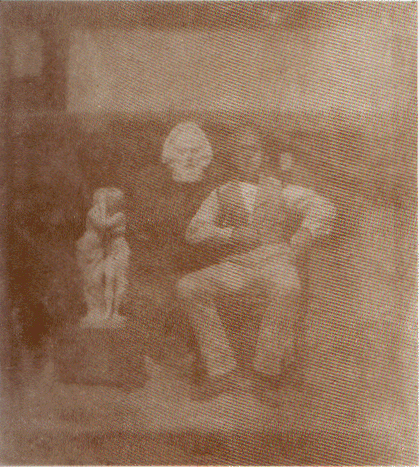
Bayard was extremely furious as this turn of events, as you can imagine, and in response created what is now considered the first work of conceptual art (in addition to inventing the selfie); A Self Portrait As A Drowned Man. This is what he wrote on the back of the print:
The corpse which you see here is that of M. Bayard, inventor of the process that has just been shown to you. As far as I know this indefatigable experimenter has been occupied for about 4 years with his discovery. The Government, which has been only too generous to Monsieur Daguerre, has said it can do nothing for Monsieur Bayard, and the poor wretch has drowned himself. Oh the vagaries of human life....! ... He has been at the morgue for several days, and no-one has recognized or claimed him. Ladies and gentlemen, you’d better pass along for fear of offending your sense of smell, for as you can observe, the face and hands of the gentleman are beginning to decay.
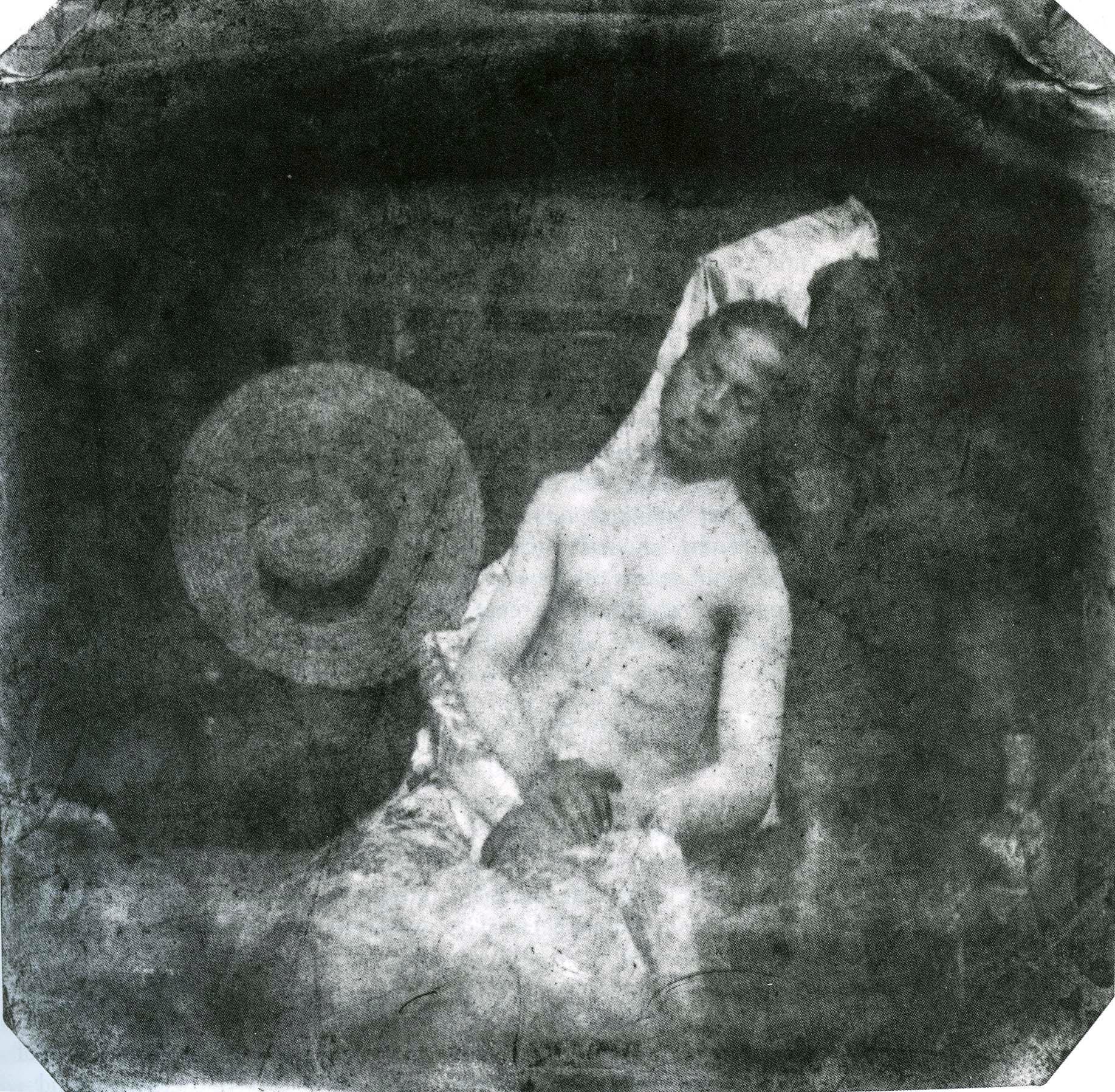
Touche! Hippolyte, what an exquisite fuck you! You win in my eyes.
Also, the more things change the more things stay the same if you know what I’m getting at. Anyway, next time someone asks you who invented photography, you know what to say.
Keep it loose, make weird art
Lo x
PS: Also, as the great song goes, I ain’t too proud to beg, please heart my work here, share it round and otherwise engage so The Great Algorithms let it find more readers…
A nice précis on something we take for granted every day looking at so many images. Interesting to reflect that someone had to create this mode of expression. Though I doubt they would have realised then when it was basically done only for portraiture the enormous range of subjects and uses it would eventually be put to...........
Superb! I was sharing the story of the birth of photography in a farm in Normandy with Jenny's niece who lives there. The nearby town Sees as well as a magnificent cathedral is the birth place of the inventor of the modern graphite pencil, Monsieur Conte.
His bust survives in the square, only because the locals hid it from the Germans in WW2. They took his body to use the metal.
Thanks for your thoughtful and wonderful writing.