

Hits Different
On Murder Ballads, Misogyny & Songs in the Key of Death

I’m not the first to note this and I sure won’t be the last, but isn’t it crazy how when you suddenly realise something and understand how messed up it is, it’s not possible to return to that place of blissful ignorance, and the fact that you were unable to see it originally feels a little disturbing.
There was a time I was crazy about violent songs, murder ballads, songs with brutally shocking lyrics about men exacting fatal revenge on women that cheated on them or no longer wanted to be with them. They struck me as wildly subversive, darkly exciting and quite hilarious. Which they were. But the part I didn’t really notice then, and now can’t help hearing, and subsequently finding the song difficult to admire/enjoy, is the horror of men murdering women because that’s what they deserve if they don’t love the men. All these amazing recordings just hit different, and now excite very mixed emotions in me.
The definitive, incredible Hendrix version of ‘Hey Joe’ was a firm favourite of mine (their first single no less!), but I soon discovered equally mind blowing versions - including the French Johnny Hallyday one and the Tim Rose long version (thanks Noah!) that served as the inspiration/template for the recorded Hendrix version, featuring the insanely haunting sexy drumming of Bernard ‘Pretty’ Purdie (according to Modern Drummer he is ‘known for his precise time-keeping and his signature use of triplets against a half-time backbeat: the Purdie shuffle’).
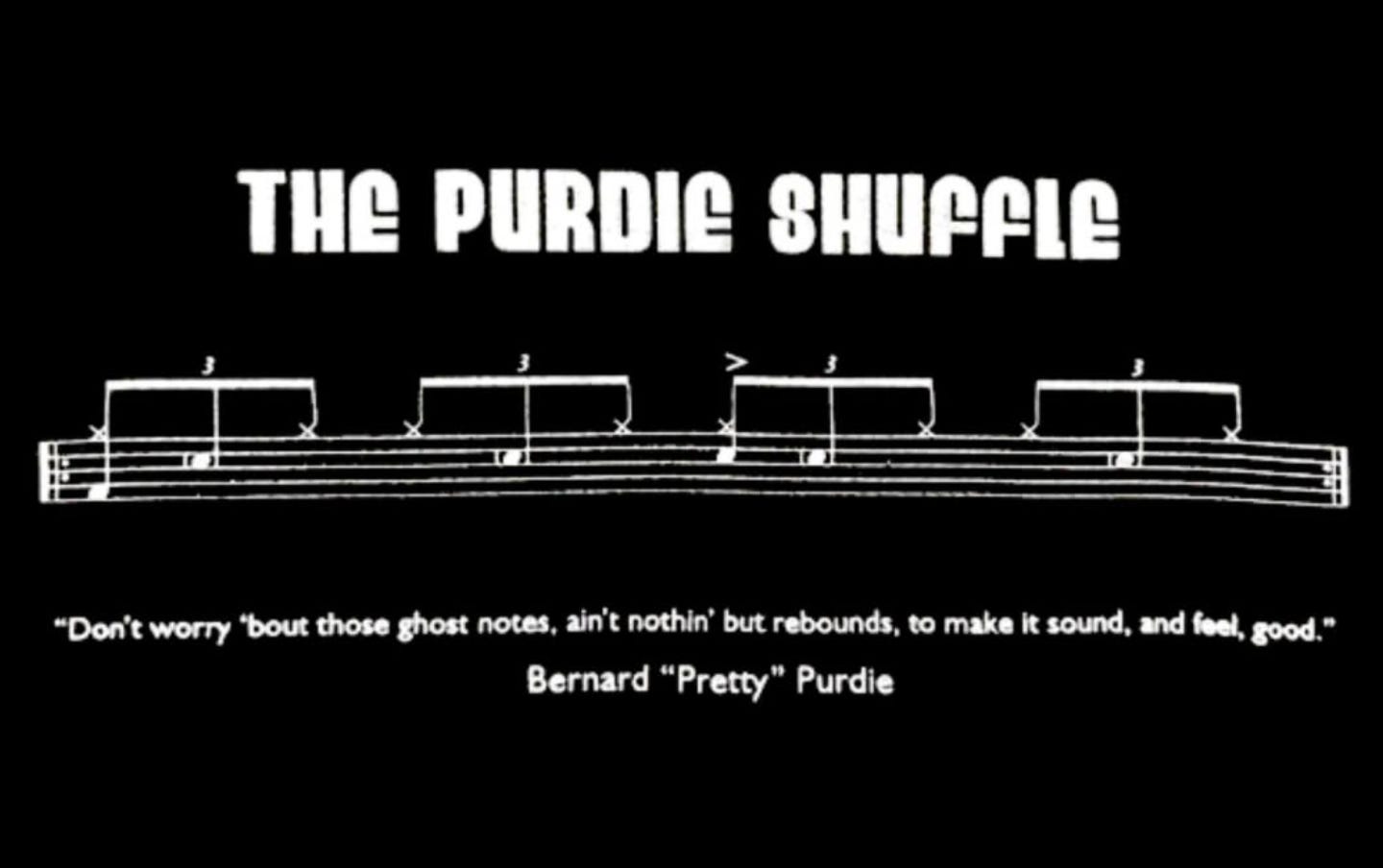
Tim Rose always maintained that he had heard the ‘Appalachian folk song’ as a little kid, and adapted it for himself, most likely referring to ‘Little Sadie’, recorded by Clarence Ashley in 1929, which really bears little musical resemblance to ‘Hey Joe’ although there are lyrical similarities.
Despite years of research, no other song has yet been uncovered that sounds quite like ‘Hey Joe’.
The credited writer of ‘Hey Joe’ is a young Southern white fella by the name of Billy Roberts. According to his then girlfriend, Niela Miller, in the mid/late 50s they were both crazy about old blues and folk songs, working at songwriting, ensconced in the Greenwich Village scene and busking around. She says when they first met, she took him in and gave him a place to stay, and she also taught him her song called ‘Baby, Please Don’t Go To Town’ - based on a circle of fifths chord progression featuring a remarkably similar vocal melody to ‘Hey Joe’.
He wrote ‘Hey Joe’ a couple of years later, in 1959, after they split (he didn’t register copyright until 1962). She has said ‘Imagine my surprise when several years later I heard ‘Hey Joe’ by Billy Roberts! There was my tune, my chord progression, my question answer format. Pete Seeger, who I knew back then, recognized it as a rip-off and offered to testify that he had heard my song long before it came out as this remodeled version. He dropped the bridge that is in my song and changed it enough so that the copyright did not protect me from his plagiarism. I never cared about the money but an acknowledgment from him would have been nice!’
In a 2011 late night internet comment on a Wordpress article about ‘Hey Joe’, Niela said that she didn’t take him to court because she figured it would be a waste of time ‘However, HE knows that he committed a morally reprehensible act and, even though he didn’t benefit monetarily as much as others, he never was man enough to make amends and apologize to me or to give me credit for the inspiration. It is also why I made the decision not to become a professional songwriter; it left a bad taste in my mouth.’
It strikes me as sadly ironic (actually, completely tragic) that a song stolen from a young female songwriter about ‘the perils of being a young woman in the city’ was reworked as a self serving, swaggering song about murdering a woman in revenge at being cuckolded, then leads to money, success and accolades for the men who performed it and results in the female songwriter being so disheartened she abandoned her dreams.
The popular western swing song ‘Cocaine Blues’, written by Troy Arnall in the early 1940s, and recorded soon after by Roy Hogsted, has also been attributed to a reworking of ‘Little Sadie’.
Johnny Cash’s legendary version of ‘Cocaine Blues’ was famously recorded live in San Quentin Prison, New Years Day 1958, for a bunch of 5000 inmates (including Merle Haggard), winning them over with the opening lines Early one mornin' while makin' the rounds/Took a shot of cocaine and I shot my woman down. Our narrator goes on to explain that he Shot her down because she made me sore/
I thought I was her daddy, but she had five more and ends with words of warning to listeners to lay off the cocaine and the whisky because the narrator can't forget the day I shot that bad bitch down and is now stuck in Folsom for 99 years. Sure sounds like victim blaming to me. He could have just walked away and made better choices in his love life. I know, I know, I’m being such a woke spoilsport.
And honestly, like many of us, I lived for sing-screaming the line I shot a man in Reno, just to watch him die! along with Johnny Cash in his signature tune ‘Folsom Prison Blues’, every time I heard it played. That ice cold Man In Black demeanour of the perpetrator in the song seemed so cool and heroic, with a dash of intrigue and danger, rather than the psychopathic behaviour we now understand the reality of that to be only too well, having vicariously witnessed a horrifying number of pointless murders of crowds of strangers and school children.
One of Cash’s later popular hits was ‘Delia’s Gone’, where a killer recounts murdering his unfaithful lover, who now haunts his sleepless nights in jail.
First time I shot her
I shot her in the side
Hard to watch her suffer
But with the second shot she died
Delia's gone, one more round
Delia's gone
The original song was inspired by the murder of a 14 year old ‘scrub girl’ (laundress), Delia Green, on Christmas Eve 1900, at a party thrown by her employers by a Moses Houston, a 15 year old boy who was incensed that she called him ‘a son of a bitch’. Despite first confessing to the murder and stating he’d do it again given half the chance, in court he claimed it was an accident. He was sentenced to life in prison, even though he turned up in short pants to illustrate his youth, but was paroled after 12 years. Little is known about what happened to him after that.
During the trial, it emerged that although Delia quite liked Moses, she found him far too needy, possessive and controlling. A Savannah Morning News article from 1901 stated that Delia ‘had been accepting for some months Houston’s ardent attentions, but when he pressed her to admit a preference for him above all others, she evaded the point’. The article claimed ‘when he could bear her taunts no longer, he drew a revolver and fired… striking her in the groin’. Delia survived a few hours but died the next morning. She was buried in an unknown grave.
In 2020, The Killer Blues Headstone Project, a nonprofit organisation who raise money to purchase headstones for blues musicians buried in unmarked graves, provided a memorial headstone to honour her heartbreaking legacy. Founder of the project, Steven Salter, says ‘It’s a simple matter of paying it backwards ….All the people made money off the songs about her, but none of them saw fit to see to it that her grave was properly marked’
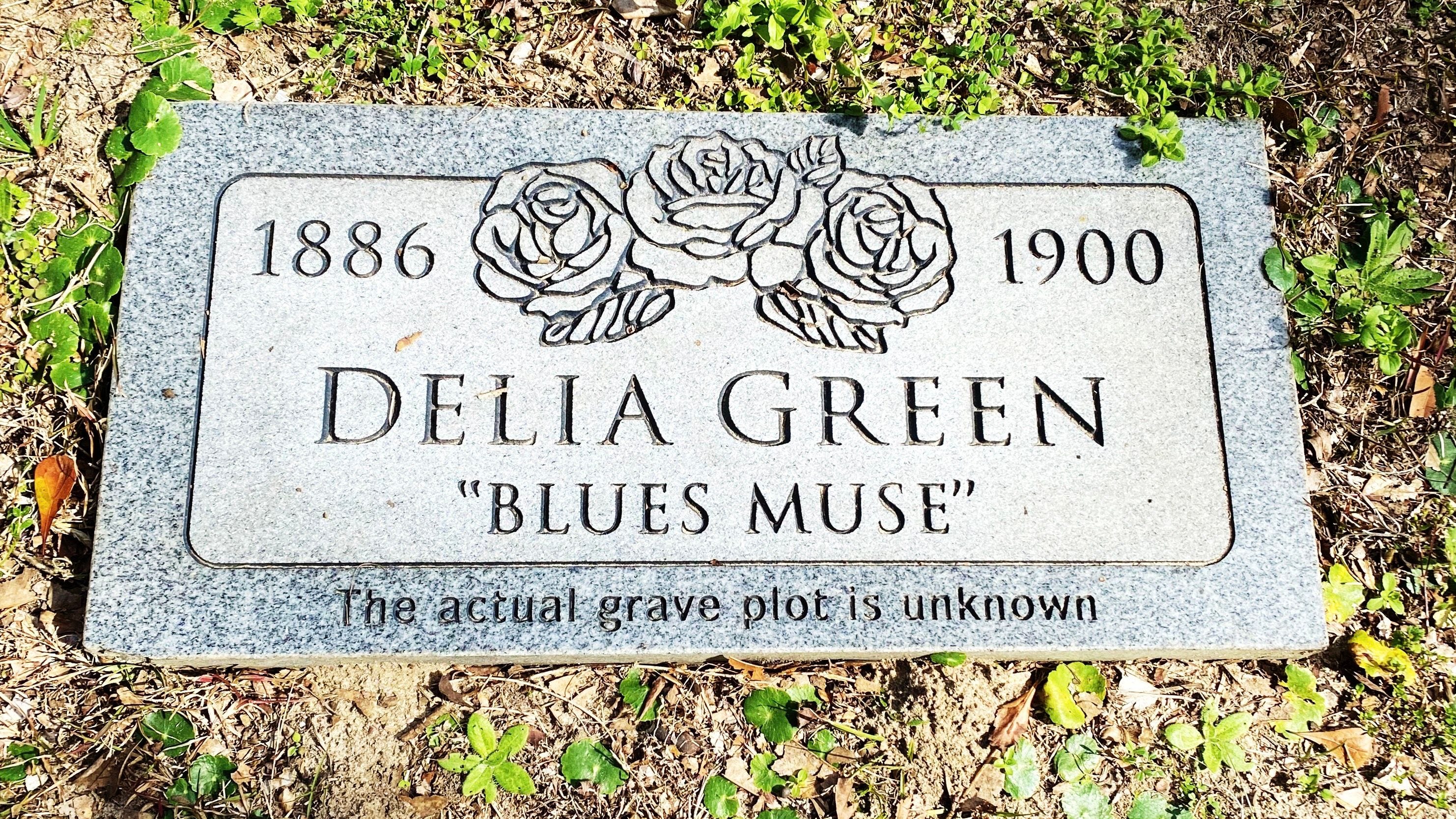
The story of Delia and her murder morphed and changed dramatically as it was retold in song (Delia - with no way to stand up for herself - was eventually painted as a wayward ‘gambling girl’); I urge anyone interested to read this excellent article (Delia’s Gone: On the Trail of a Folk-Song Ghost by Courtney E Smith), who also posits ‘That’s how history gets miswritten. The dead don’t talk, and all we ever heard from Delia were a handful of sentences’.
The first version noted by folklore historians was called ‘One More Rounder Gone’, in 1924 , Blind Willie McTell performed ‘Little Delia’ in the 1920s which became the version known just as ‘Delia’ recorded by Pete Seeger, Bob Dylan (a sad and lovely version) and many others. ‘Delia’s Gone’ (first recorded by Blake Alphonso “Blind Blake” Higgs) written from the perspective of Delia’s murderer and made most famous by Johnny Cash’s unforgettable 1994 comeback album, produced by Rick Rubin.
It was a darkly stark recording, somewhat jaunty even, courting further interest with an ‘edgy’ videoclip directed by Anton Corbijn, starring a tied up/dead/gorgeous Kate Moss as ‘poor Delia’ and Johnny Cash as her unrepentant killer.
Curious as to the reception it received at the time (although I found it pretty creepy, I also remember loving it!), I looked it up and found this piece in the LA Times;
Plenty of people have fantasized about shooting uber-thin model Kate Moss dead. None of them, however, work for MTV’s standards committee. After seeing Johnny Cash’s new video, “Delia’s Gone,” officials at the cable channel ordered a tamer cut of the deadpan tale, which stars Cash as a coldblooded murderer and model Kate Moss as his coldhearted--and dead--girlfriend, Delia.
“I guess they have a thing about dead women,” said a spokeswoman for Cash’s label, American Records. “You can’t abuse women when they’re dead, or something.”
What you won’t see in the video, which started airing this week on MTV, is a shot of Moss tied by a thick rope to a wooden chair that has toppled from the force of two gunshots and another shot of Cash--hair blowing like a madman--shoveling dirt onto Delia’s pretty face. (We thought she looked rather beautiful.)
Interestingly, Johnny Cash is also credited as the sole writer, and when I looked it up on the MLC which monitors and pays out streaming royalties, there are pages and pages of various recordings of ‘Delia’s Gone’ listed, all with multiple different writers claiming credit. Hmm, not sure how that works. But I digress. As usual. Sorry, I can’t help it.
I was quite obsessed with the genius construction of the disturbing 1989 George Jones song ‘Radio Lover’, where George tells the story of a loving husband and popular DJ with a nightly radio show, who decided to surprise his wife by prerecording the show and heading home to her on their first anniversary, only to discover her in bed tending to her needs with another man:
The radio was playing, and as he walked in on her and her lover
He heard himself saying the last words that they ever heard
‘Coming to you live like I do every night
From the heart of your radio
I play a little sad, and I play a lot of glads
And a few old cheatin' songs’
The double murder is chillingly implied by the line the last words that they ever heard, but at first listen, the song is a feel good, country standard singalong cheating song - if you weren’t a deep lyric listener you may never have realised it was actually a murder ballad. To my ears, I can also imagine the ease with which that crime of passion may have been dismissed as justified homicide, letting our murderous but romantic-at-heart DJ continue on as though nothing had ever happened. This comment written below the YouTube video bears my theory out: “There are so many bad women. Here she is, first year of marriage to an obviously successful DJ, considering he had millions of listeners, and she’s already cheating on him. Cheating on the man who obviously loved her and wished everyone had a lover as true as her. Such a sad song. Such typical behavior”.
Obviously deeply inspired by the proliferation of popular murder ballads I heard in my youth, including more contemporaneous songs such as the hypnotic ‘Where The Wild Roses Grow’ by Nick Cave & the Bad Seeds in 1995 - inspired by Appalachian folk song ‘Down In The Willow Garden’ and at least giving a questioning voice to the innocent victim Eliza Day, memorably portrayed by Kylie Minogue (On the third day he took me to the river/He showed me the roses and we kissed/And the last thing I heard was a muttered word/As he stood smiling above me with a rock in his fist) and the fabulously fucked up 1984 ‘Psycho’ cover by Beasts of Bourbon (Mama, why don’t you get up?), I embraced the normalisation of murderous intent and tried my hand at a few of my own.
I was especially proud of an epic I wrote called ‘Better Off Dead’ where the narrator declares its a shame that he has to do it but he can’t stop fantasising about killing his romantic partner, and eventually can’t resist. I tried and failed to pitch the tune to various male artists I knew because it ‘felt wrong’ for me to sing it as a woman (so take your position, while I find that damn ammunition, and get ready for your final bow…), before eventually biting the bullet and recording a strange, cough medicine enhanced demo of it in Nashville myself. I haven’t thought about it since, and although I still like the structure and poetry of the lyrics, I can’t get behind the content and I can’t imagine myself ever releasing it.
LISTEN TO THE ‘BETTER OFF DEAD’ DEMO HERE - SHH ITS A SECRET
Oh I better find me a blonde
To help me forget
Or maybe a redhead
Or better yet a brunette
Cos I still have these dreams
Where I’m hearing you scream
You done me wrong for too long
One of the first songs I ever wrote was called ‘Date Rape Song’, which was presented as an uptempo early Brenda Lee kind of thing, but detailed a girl going on her first date with Bobby, a guy she really fancies, until he ‘touches her in places she’s never even seen’ and forces himself on her in the car. Luckily, her suspicious father comes along and puts an end to Bobby with a pick-axe, while she tries to tune out the horror of the events taking place by turning the car radio up to drown out the sound of him being massacred. When I first started performing it, I’d insert a series of blood curdling screams into the solo, before reverting to sweet-as-apple pie for the outro. No one quite knew what to make of that one, though they seemed to enjoy it.
But no one sung about fathers in murder ballads quite like little Tanya Tucker, whose version of ‘Blood Red & Going Down’ (recorded age 14, written by Curly Putnam, who was also one of the writers on ‘Radio Lover’ and ‘the greatest country song ever’ ‘He Stopped Loving Her Today’) can still chill me to the bone.
It’s a truly harrowing tale of an enraged, psychopathic father dragging his young daughter through various drinking holes looking for her mother who has run off with ‘some dude’, before eventually finding and killing them both. As Tanya says at the end of verse 3, ‘At times like this, a child of ten, never knows exactly what to say’.
We searched in every barroom and honky tonk as well
And finally daddy found them and Lord you know the rest is hard to tell
He sent me out to wait but scared I looked back through the door
And daddy left them both soakin' up the sawdust on the floor
Now songs aren’t real life but the proportion of songs about men murdering women is probably pretty accurate percentage-wise to the number of actual murders of women by men versus murders of men by women, which appears to be well over 80% (so many reports, I can’t quite work out which is the most trustworthy so will just go with this safe but vague data, but we all know its probably higher).
The Chicks ‘Goodbye Earl’, released in 2000, is one of the few female-centric murder ballads that really impacted popular culture - although its far more gleeful celebration than ballad - and it was actually written by a male songwriter. Its the story of Wanda who ends up married to abusive asshole Earl, finally gets the nerve to divorce him and get a restraining order but he waltzes in and puts her back in intensive care. Her high school best friend Mary Anne turns up and together they take things things into their own hands by poisoning his black eyed peas, Earl ends up a missing person who nobody missed at all and the girls end up happily running a roadside jam and ham stall. It strikes me that the glaring difference in this song from the long history of murder ballads its draws from, is that this victim was actually a monster, rather than just a lowdown, cheating ho that the singer would still love to marry if she wasn’t such a bitch that she deserved to die.
Taylor Swift’s ‘No Body No Crime’ takes obvious inspiration from ‘Goodbye Earl’ - and true crime podcasts - the central character knows her best friend Este has confronted her husband about his cheating, and when Este goes ‘missing’, the narrator teams up with Este’s sister to ‘disappear’ the husband and frame his new mistress.
One of the few murder ballads where the murder is perpetrated by a woman in a vengeful rage against her unfaithful lover (although once again written by a man, not that I’m trying to make any points about that really) is Bessie Smith’s ‘Send Me to the 'Lectric Chair’ released in the 1920s, and notable for being banned by the BBC.
Judge you wanna hear my plea
Before you open up your court
But I don't want no sympathy
'Cause I done cut my good man's throat
I caught him with a trifling Jane
I warned him 'bout before
I had my knife and went insane
And the rest you ought to know
Neko Case recorded a stirring version of ‘Poor Ellen Smith’, a traditional murder ballad based on the true story of a possibly pregnant seventeen year old hotel worker, killed behind the hotel by her lover in North Carolina, 1892, who managed to evade the law for thirteen months before being the last man hanged in Forsyth County - on the gallows he apparently confessed and warned the onlookers of the dangers of liquor, cards and ‘bad women’. Apparently there are many differing versions of this folk song but as it’s new to me, I would recommend reading one of the many deep dives online if you are interested to learn more. I know I will be.
Although often hard to listen to in a modern context, murder ballads give us a way to reflect on victims, killers and reckoning with times past. There’s no doubt that true crimes and women’s bodies, dead or alive, are the driver of so much of our entertainment, both historically and still.
Keep breathing,
Lo x
Further reading/listening: Songs In The Key of Death podcast series, created by Courtney E Smith (I have listened to this yet, but I have no doubt it’s fantastic)
Read Unprepared To Die: America’s Greatest Murder Ballads & The True Crime Stories That Inspired Them
Thanks for writing this Lo. It's something I've often thought about, and you have articulated it beautifully and thoroughly. I recently performed in a Neil Young tribute show, and the promoter really wanted "A Man Needs a Maid" in the set. Members of the band were... No Way! We can't sing that.. and as the promoter pointed out, but you can sing Down By the River (I shot my Baby) without a second thought? She had very good point there. Often, the subversive and dark nature of those songs musically is where the appeal lies, as you pointed out.
Hi Lo. I remember the first time I noticed "I shot a man in Reno, just to watch him die".I use to like Johnny Cash just for that line.
And ,interesting that you talk about Bernard Purdee . Did you know I brought him home to our house in Bellevue rd one night . I had finished my gig at the hero of Waterloo, and dropped into the Basement on the way home .Got talking to this 'colored' dude at the bar, and liked him so much I invited him back for a few joints . So we cabbed it to Bellevue Hill, and sat around talking until about 5 in the morning .The funny thing was ,I had NO IDEA who he was , and then I asked him what he did for a living. He replied that he was usually playing drums for Aretha Franklin ,and I nearly fell over. Of course there are pages and pages of his accomplishments that I read later,(like being secretly asked to play a few times instead of Ringo for the Beatles,) and stuff.